Pavel Slepnev, Director of Peterhof Design, explains the benefits of BIM for his team of engineers and architects based in different cities.
Company Profile
Since 2012, Peterhof Design has been working on essential public and private infrastructure projects. From day one, we’ve worked remotely. Sometimes one or two people are in the office, but the rest of the team is spread across different cities. The company employs about 28 people.
Challenge
“BIM is a technology for large developers; most other design firms can’t use it” is perhaps the most common argument made by skeptics of the transition to building information modeling in construction. While some continue to criticize and others are only beginning to prepare for BIM adoption, Renga users are already showcasing completed buildings based on their designs and sharing their experience with collaboration across geographically distributed teams. We began adopting BIM technologies at the end of 2019, and the process is still ongoing.
Many wonder if and when they should “switch” to BIM. In our opinion, even small companies like ours should have done this a long time ago. BIM adoption is a complex organizational process that can require a lot of resources. Do not delay your switch to BIM!
Solution
We chose Renga software. We especially appreciated the auto-generation of the room finish schedule; it was not available in other products. This one feature alone made switching to Renga worthwhile for capital improvement projects. Later, we integrated the Pilot-BIM shared data environment into our BIM system, using Pilot-BIM for collision checks and final assembly creation.
Project Flow
First, a designer creates a file in Renga and works with it alone for some time: draws grids or develops entire fragments. When another team member (such as a designer or project manager) needs to join the project, the file is published to the server. Now the file is accessible for the entire team. The current version is stored on the Renga server and is available for shared editing. Today, we use BIM for all our architectural, structural, and electrical projects.
The team discusses 80% of all current tasks in the messenger. We mostly use email to communicate with third parties. For urgent matters, we can make a call or arrange a meeting either in the office or at the customer’s premises. Over the years, we have fine-tuned our remote work processes, so there are no issues.
Each employee can access the cloud storage with all the project data. Since 2020, we also have Renga Collaboration Server.
How We Collaborate
The collaboration in Renga has features that some users find intimidating. For example, there are no worksets or access rights. Theoretically, any user can edit any part of the model without any restrictions. To prevent this, we developed a set of rules and strictly follow them.
For each object, we create a group chat in the messenger. It’s used for technical decisions and to notify when someone accesses the model at a given moment. Upon logging out, the user adds a timestamp label to the model. This way, the next user who accesses the model can see all recent changes and ensure they’re working with the latest version.
Another rule is frequent synchronization to avoid collisions when two or more users are editing the same fragment simultaneously. When the group chat shows that multiple users are working on the model, we check whether the file is up to date and ask the users to update the timestamp. There was a project where four people edited the model simultaneously, and thanks to our rules, everything went smoothly.
BIM projects at the Master-Renga Contest
Results
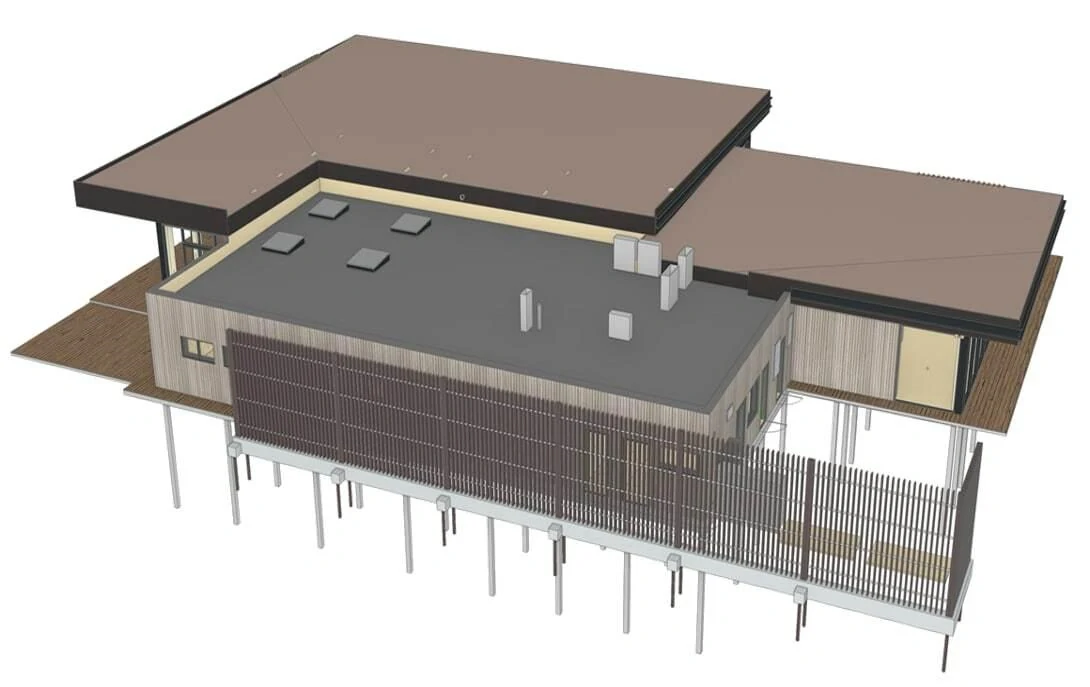
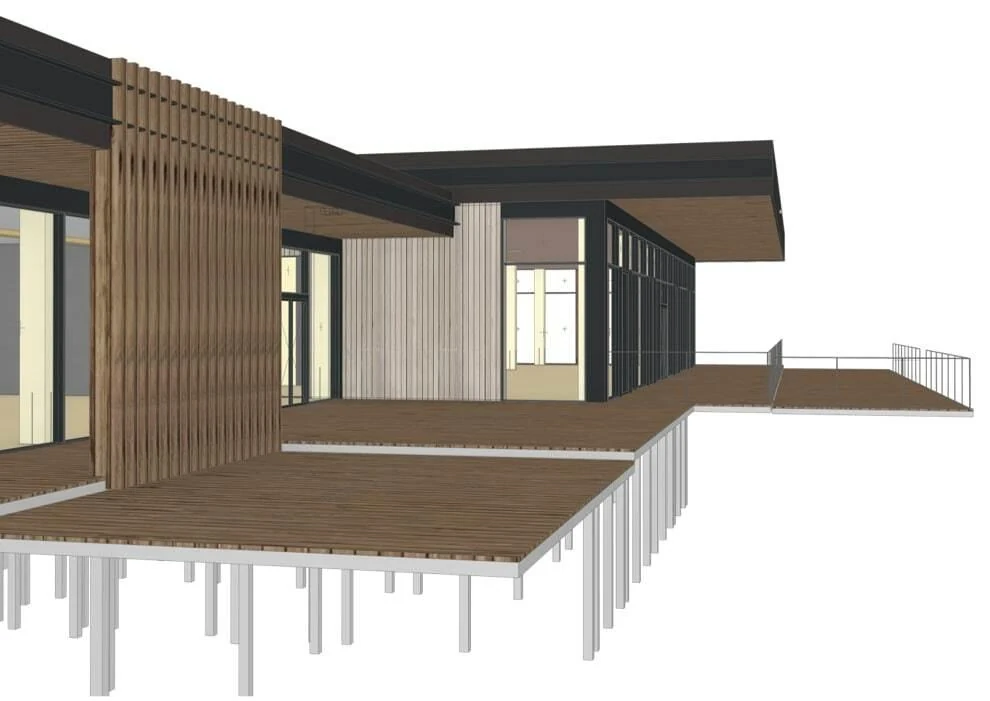
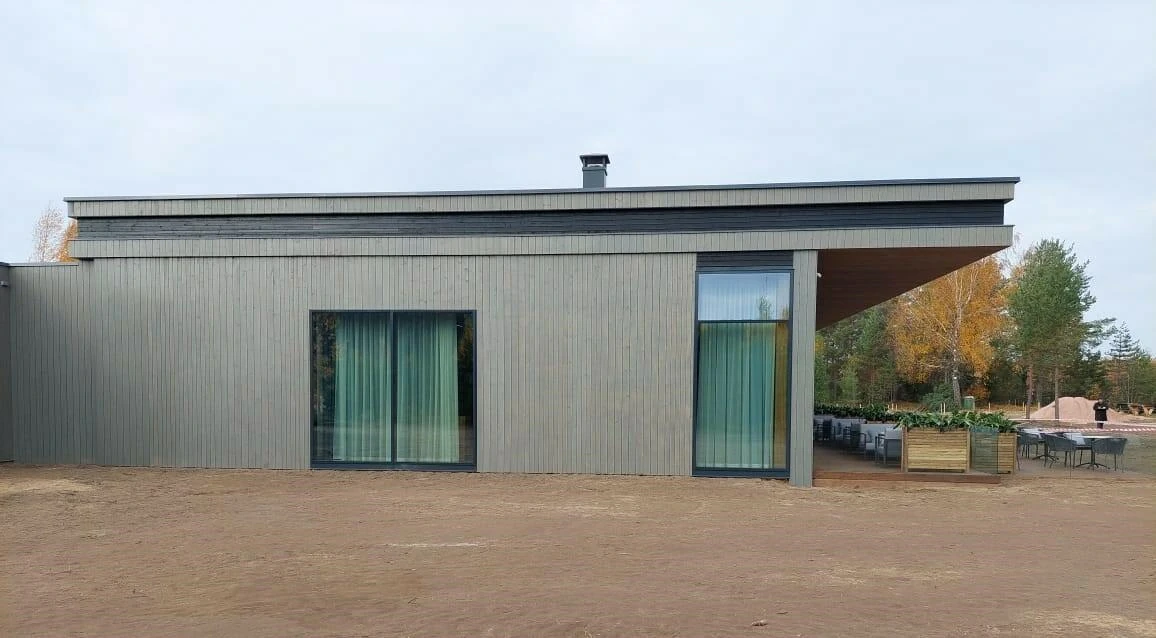
We presented several of our projects at the Master Renga International Contest, organized by Renga Software for its customers. One of these projects was a restaurant at the Spot on the Map Hotel. The building has since been completed. The restaurant building has a complex shape. It consists of three sections. We exported the foundation slab and frame models in IFC format for the analysis model.
The architect, engineer, and designer successfully collaborated. They were joined by the builders who could also access the model.
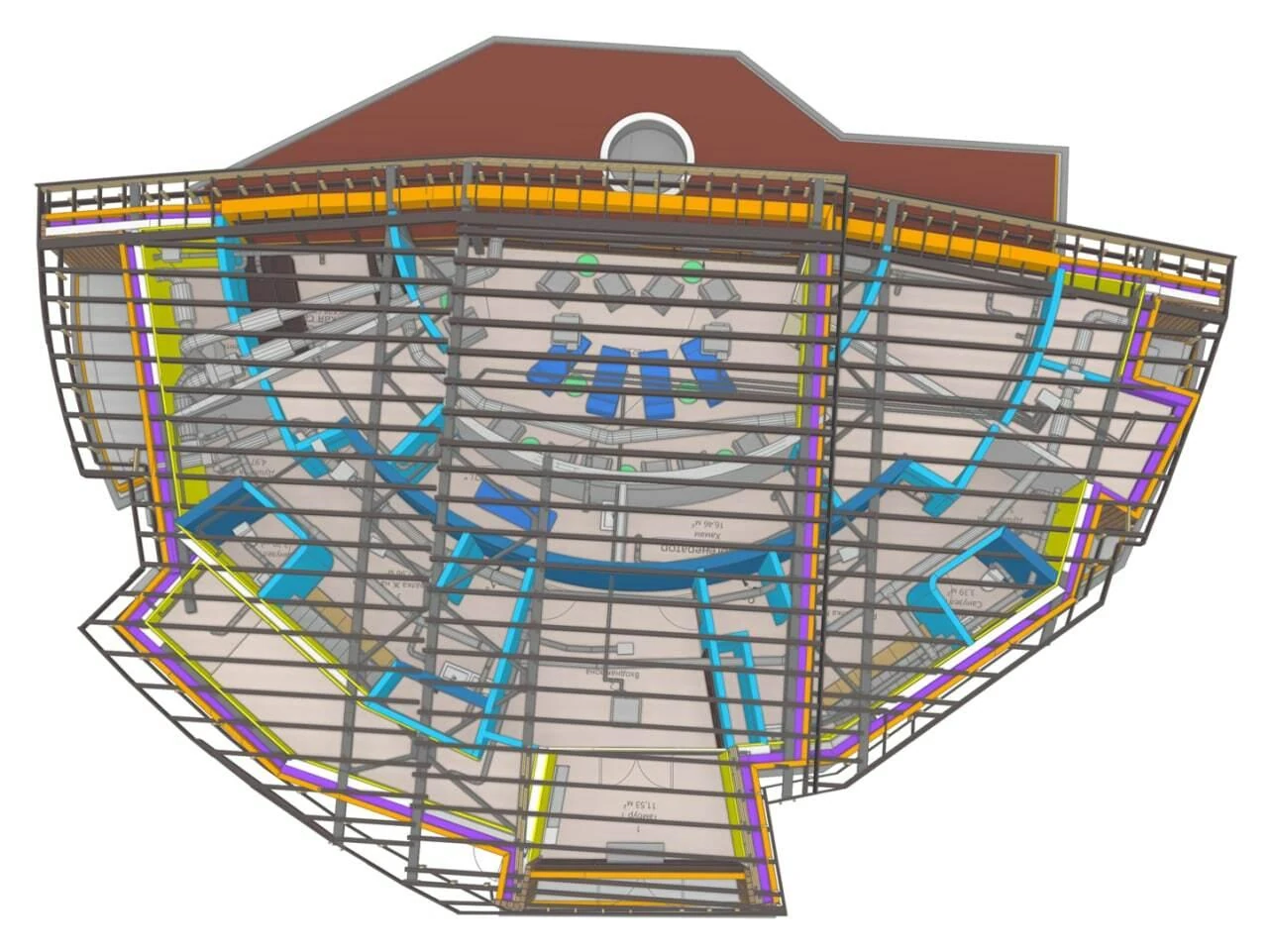
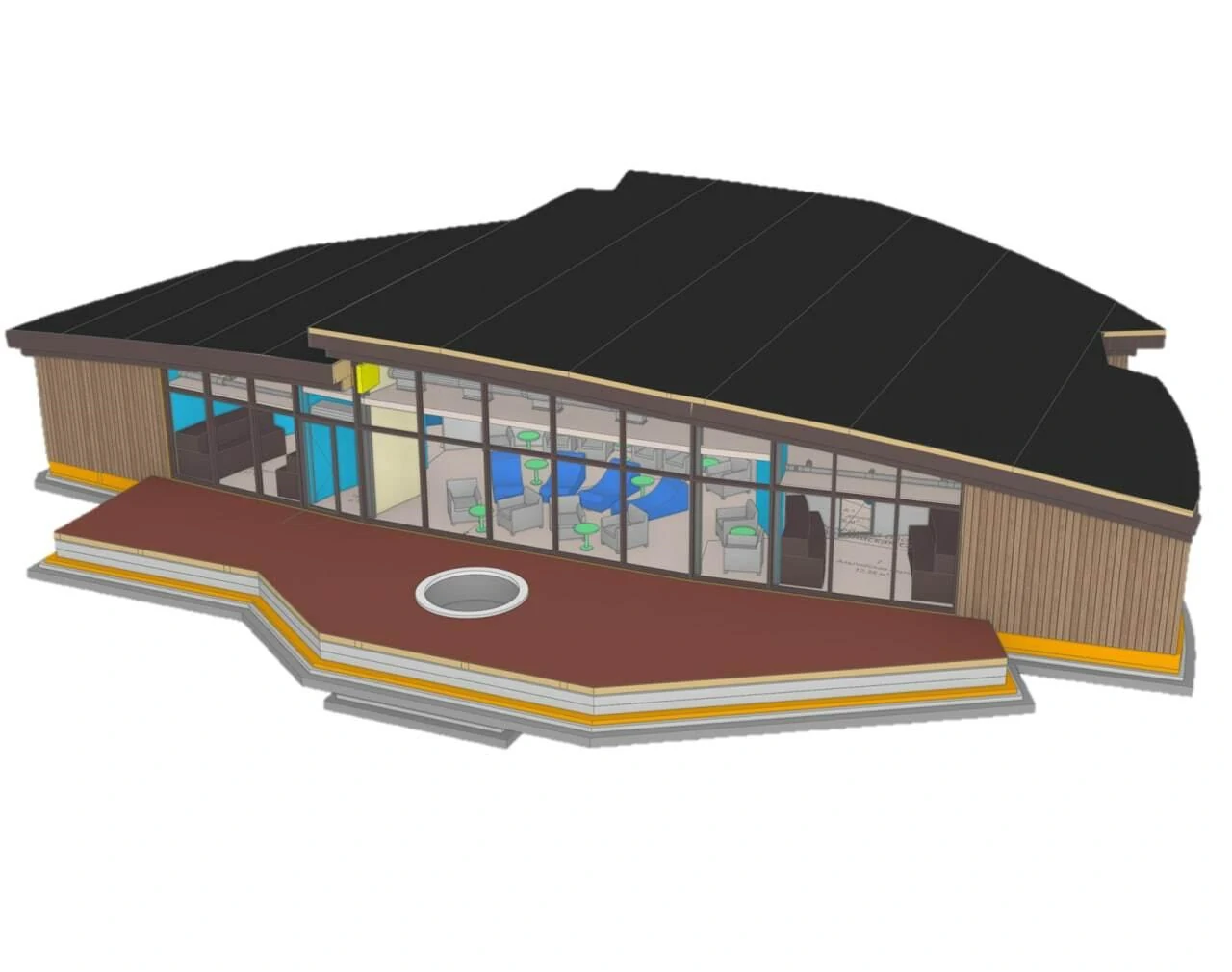
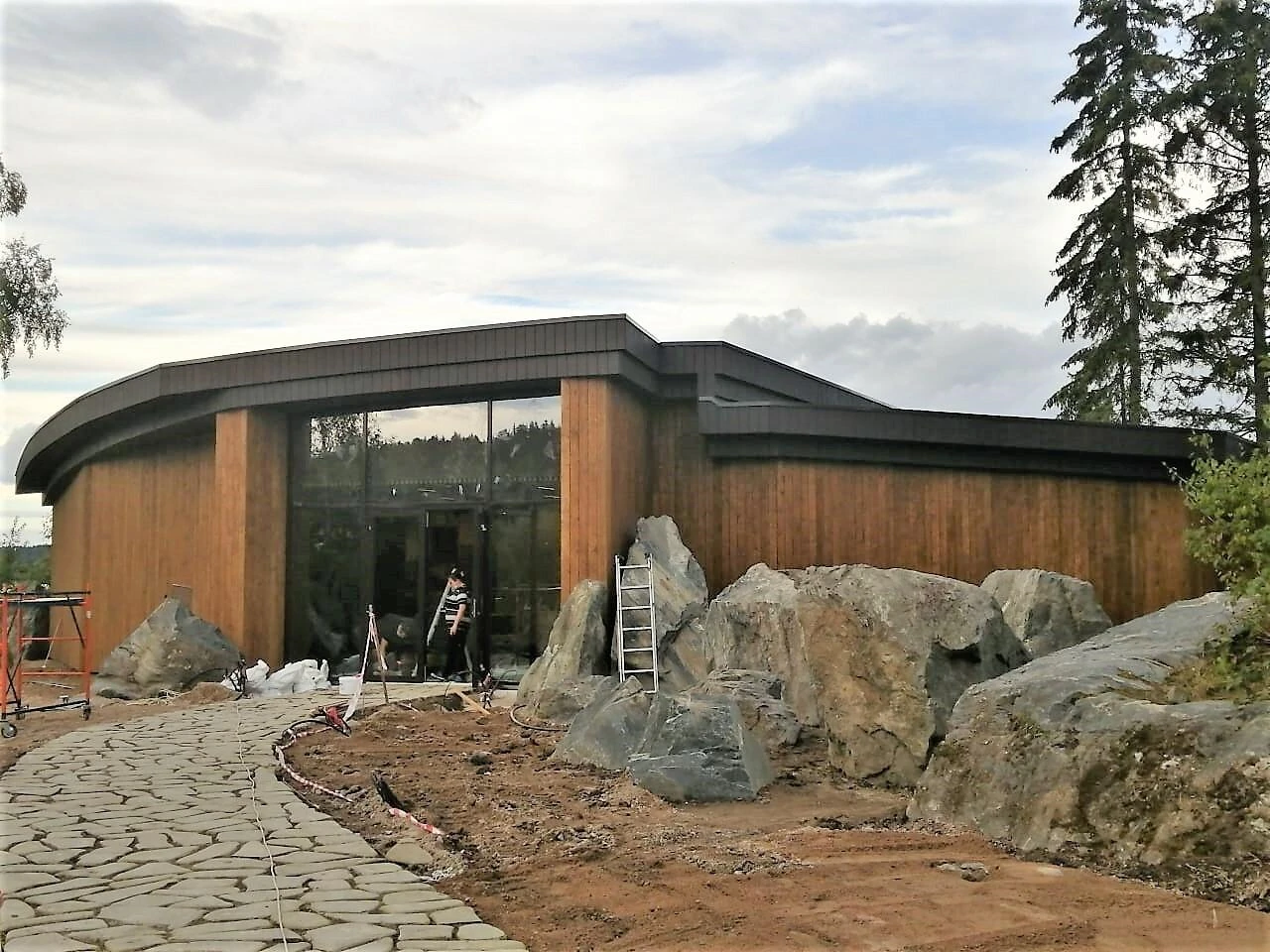
Another project that won the "BIM Yesterday" nomination (for Renga projects turned into completed buildings) is the SPA at the Winter Dacha Park Hotel. The customer requested no right angles, resulting in a building with a highly complex shape. We modeled the flat, rounded roof as sections installed at different slope angles. In this project, we used Renga to create architectural and structural drawings and to check for any collisions between the structure and utilities. For this project, we hired an HVAC designer. At the subsequent stage, the designer downloaded input data directly from the model.
Business Values
BIM Adoption: Benefits and Challenges
For a complex project like the SPA, 2D drawings cannot fully capture every detail. A 3D model is the ideal choice for both project development and actual construction. We should also highlight the convenient visualization: during a meeting, you can open the model and rotate it, helping the customer better understand the project. Another BIM advantage that both we and our customers have also appreciated is automated structural analysis.
A 3D model is much more convenient to detect and correct errors. At a higher level, it seems to me that 3D modeling encourages engineers to think differently, designing assemblies and structures more thoroughly and thoughtfully.
What we are still lacking in our BIM journey is a clear manual for architects, as we simply don’t have enough time to develop one. The designers and electrical engineers now work as quickly as they did with 2D, while the architects are adopting 3D at a slower pace. I realize they need regulations, and we are already starting to develop them.
There is an opinion Renga is unsuitable for modeling complex objects such as a curved wall or vaulted roof. With our projects, we prove the opposite. The Renga development team and tech support have also contributed through their advice and recommendations. We receive clear answers to every question.
I can confidently say: don’t be afraid of potential inconveniences. Once you master Renga, you won’t want to switch to any other software.